

Future Challenges of Lithium-ion Batteries
introduction
Driven by the global energy transition, the lithium battery industry is entering a phase of rapid, large-scale expansion. Many countries and regions consider lithium batteries a strategic industry, accelerating the development of their local production capacity and supply chain systems.
As the industry continues to grow, the challenges it faces are no longer limited to capacity building itself, but are gradually evolving into systemic issues involving supply chain stability, resource security, energy and infrastructure capacity, and policy environment coordination. How to maintain the long-term stability and efficiency of the industrial system in the context of regional expansion is becoming a critical issue that the lithium battery industry must confront.
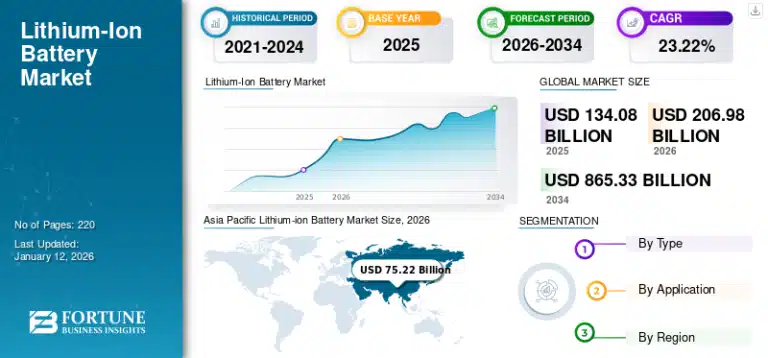
Systemic challenges brought about by the expansion of the lithium battery industry
From an industry development perspective, the lithium battery industry has moved from the technology introduction phase to a phase of large-scale expansion.
Whether in China, Europe, North America, or emerging market countries, lithium battery production capacity is expanding rapidly through regional clusters. However, once the industry scale crosses a certain critical point, the challenge is no longer "whether it can be produced," but rather whether the entire system can continue to operate stably, efficiently, and sustainably.
1. Supply chain system risks arising from regional concentration of production capacity
A prominent feature of the current lithium battery industry is its highly concentrated expansion within specific regions and countries.
For example:
East Asia has formed a complete cluster of battery manufacturing and supporting materials.
Europe is accelerating the construction of local battery factories to reduce external dependence.
North America is promoting the restructuring of its domestic supply chain to meet policy and security requirements.
While this regional expansion enhances local manufacturing capabilities, it also brings new systemic risks:
Intense competition for raw materials, key equipment, and technical talent within the region.
Policy changes, energy costs, or geopolitical risks in a single region can be amplified across the entire industry chain.
Lack of coordination in regional capacity planning can easily lead to periodic structural overcapacity.
For the industry, supply chain stability is shifting from a "global allocation problem" to a "regional systemic problem."
2. Systemic constraints on large-scale expansion imposed by upstream resource limitations.
The expansion of the lithium battery industry is continuously amplifying the pressure on upstream resource systems.
Globally, the development of key resources such as lithium, nickel, and cobalt exhibits the following characteristics:
Highly concentrated geographical distribution
Long development cycles and capital-intensive operations
Significantly influenced by policy, environmental, and social factors
When multiple countries simultaneously promote the expansion of their domestic lithium battery industries, the elasticity of resource supply is clearly insufficient, leading to the following challenges for the industry system:
Raw material price fluctuations have become the norm, rather than a cyclical phenomenon
Upstream resource bargaining power has significantly increased, squeezing profit margins in the midstream and downstream sectors
Resource security is gradually evolving into a strategic issue at the national level
In this context, the expansion of the lithium battery industry is no longer simply a manufacturing issue, but a systemic project involving resource allocation and industrial security.
3. Coupling pressures of energy, infrastructure, and manufacturing systems
Lithium-ion battery manufacturing is inherently a high-energy-consuming, high-precision, and highly continuous industrial system.
When multiple countries simultaneously construct large-scale battery factories within a short period, the manufacturing system becomes highly integrated with local infrastructure.
This is primarily reflected in:
The stability and cost of electricity supply directly impact production line yield and operational efficiency.
The local energy structure (the proportion of renewable energy) affects carbon emissions and compliance costs.
The carrying capacity of industrial land, water resources, and logistics systems is put to the test.
In some regions, the expansion of lithium-ion battery production capacity can even drive grid upgrades and energy structure adjustments, making industrial expansion no longer a corporate-level decision but a collaborative challenge at the regional system level.
4. Systemic bottlenecks in talent and technology systems
The rapid expansion of the lithium battery industry has placed higher demands on engineering technology, process management, quality control, and system integration capabilities.
However, in reality:
The growth in the supply of high-end technical and engineering talent has significantly lagged behind the rate of capacity expansion.
Competition for core talent among regional countries has intensified.
New production lines face "ramp-up risks" in terms of experience accumulation and process stability.
This has led to a common phenomenon: while capacity is expanding, the overall efficiency and consistency of the industry have not improved accordingly.
From a systemic perspective, talent and technological capabilities have become crucial implicit variables restricting the long-term healthy expansion of the lithium battery industry.
5. Increased system complexity due to policy and regulatory differences
As the lithium battery industry expands simultaneously across different countries and regions, the differences in policy and regulatory environments are significantly increasing system complexity.
These include, but are not limited to:
Inconsistent safety standards and testing specifications
Significant regional differences in environmental protection and carbon emission requirements
Frequent adjustments to subsidy policies and market access rules
For lithium battery companies operating across regions, this means:
Continuously rising compliance costs
Lengthened industry decision-making cycles
Significantly increased system management difficulty
During the expansion phase, policy uncertainty has become one of the key systemic factors affecting industry stability.
Perspective Summary
Overall, the expansion of the lithium battery industry is evolving from a "capacity building issue" to a multi-dimensional system coordination issue.
The core challenges of the future lie not in who builds more factories, but in:
who can build a more stable regional supply chain system;
who can achieve a long-term balance among resources, energy, talent, and policy;
who can maintain system efficiency and risk control during expansion.
This will determine the long-term competitiveness and sustainable development capabilities of the lithium battery industry in different countries and regions.