What is a 10 kWh home battery? What are the application scenarios for a 10 kWh battery?
nacci
Nacci Battery Co., Ltd. is a high-tech enterprise integrating production, sales, technical support and after-sales service.
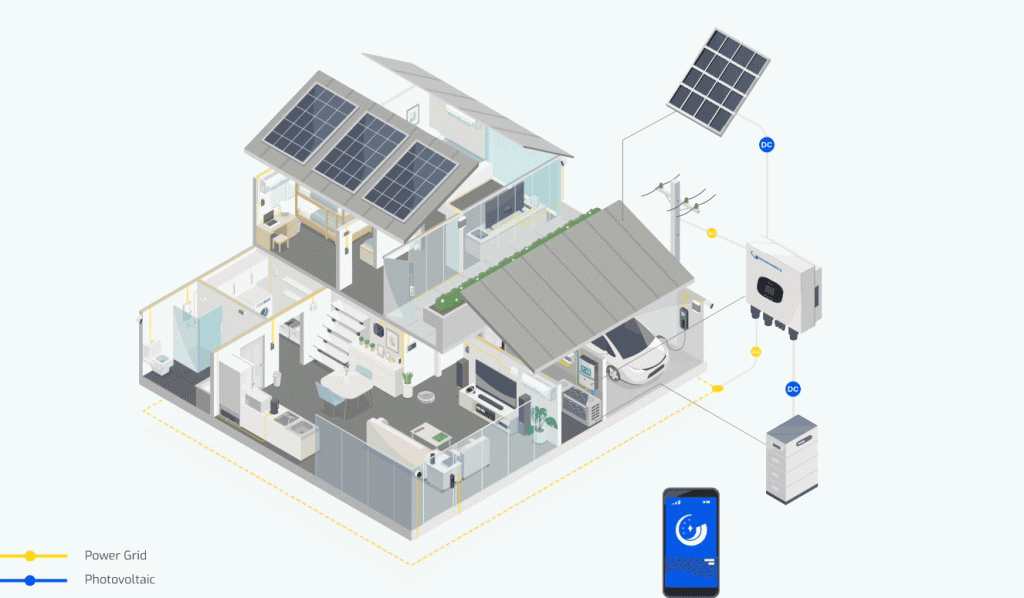
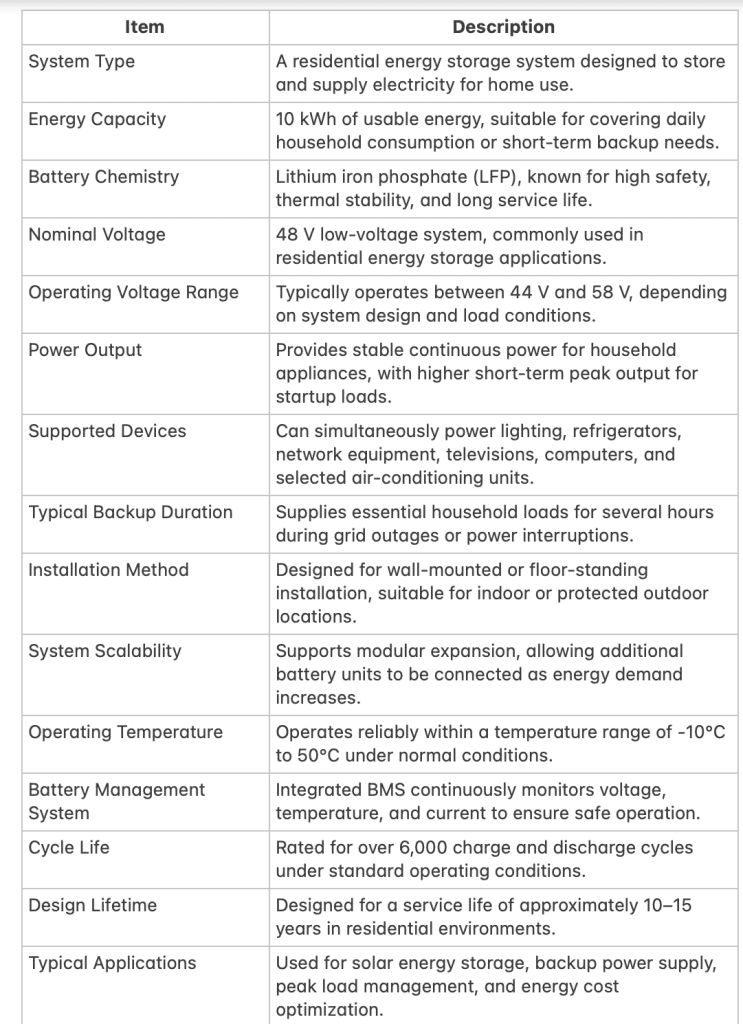
A 10 kWh household battery refers to a residential energy storage battery system with a rated energy storage capacity of 10 kWh, primarily used for household energy storage, backup power supply, and coordinated operation with photovoltaic systems. Its characteristics and applications are detailed below.
10 kWh battery characteristics
Recommendations for purchasing 10 kWh batteries
Main application scenarios
1. Residential Energy Storage
Short-term backup during power outages
This is the most common use case,
2. Small Offices and Workspaces
Backup power for computers and networking equi
Lighting and basic offi
Energy cost optimizat
A 10 kWh battery can support essential loads without requiring a large, comple
3. Retail Stores and S
Emergency lighting and POS systems
Refrigeration for short outages
Peak power support during business hours
Compact energy storage helps maintain basic operations during power interruptions.
4. Clinics and Medical Rooms
Backup power for essential medical devices
Lighting and communication systems
For non-hospital medical e
5.
Cabins, remote offices, and field stations
Solar-powered off-grid systems
When paired with solar panel
6. Light Commercial Ba
Network rooms and IT equipment
Security systems and access control
These applications require r
Limitations and Considerations for a 10 kWh Battery System
1. Capacity Limitations
A 10 kWh battery provides limited energy storage and is not designed for high-load or long-duration backup.
Not suitable for heavy industrial equipment
Limited runtime for air conditioning, large motors, or full-building backup
May require multiple units for higher demand
Users should carefully match battery capacity with actual energy consumption.
2. Grid Compatibility and Electrical Standards
In many African and South American regions, grid quality and standards vary significantly.
Voltage instability and frequent outages are common
Inverter and battery systems must tolerate wide voltage ranges
Three-phase systems may require multiple batteries or special configurations
System compatibility with local grid conditions is critical.
3. Installation and Technical Requirements
Local installation conditions can affect system performance and safety.
Professional installation is often required by local authorities
Poor wiring quality can increase system risk
Ventilation and temperature control may be limited in some locations
Improper installation can reduce battery lifespan and system reliability.
4. Safety and Certification Requirements
Many countries in Africa and South America require energy storage systems to comply with international safety standards, especially for commercial use.
Commonly required certifications include:
IEC standards (widely accepted)
UN38.3 for lithium battery transportation
UL certifications (in some markets or projects)
Certified systems are more likely to pass inspection and project approval.
5. Import, Customs, and Transportation Restrictions
Lithium batteries are classified as dangerous goods, which may affect logistics.
Import permits may be required
Transportation regulations can increase delivery time and cost
Some countries impose restrictions on battery capacity or quantity per shipment
These factors should be considered early in project planning.

Summary
10 kWh batteries are a practical solution for many applications, but successful deployment depends on:
- Reasonable capacity expectations
- Compatibility with local grid conditions
- Compliance with safety, certification, and import regulations
Well-planned system design helps avoid technical problems and regulatory delays, especially in African and South American markets .