


A well-matched battery bank runs for years. A poorly matched one starts causing problems within months — and the issue almost always traces back to the purchase decision. Photo: Public Power / Unsplash
Someone calls me about their inverter system. Three months in, the battery won’t hold a charge. They bought it from a reputable seller. It wasn’t counterfeit. It wasn’t abused.
It was just the wrong battery for the job — or the right battery wired into the wrong system. Every single time.
Here are the five mistakes I keep seeing. They’re all fixable. Most of them take about five minutes of research to avoid.
Mistake 1 Buying by Price Alone
A $150 battery sounds like a good deal until you’re buying it for the third time in four years. The cost that matters isn’t what you pay at checkout — it’s what you pay per use.
$150 ÷ 200 cycles = $0.75 per cycle
$280 ÷ 600 cycles = $0.47 per cycle
The more expensive battery is actually cheaper to run. That gap gets even wider when you factor in the time and hassle of replacing it.
I’ve watched people make this calculation in reverse — justify the cheap option by looking at the sticker price, then replace it twice while the person who spent more once is still running fine.
Pick up the datasheet. Find the cycle rating. Do the division. That number tells you more than the price tag ever will.
Mistake 2 Getting the Capacity Wrong
The rated Ah is measured at full discharge under lab conditions. In a real system, how much you can actually use depends entirely on the chemistry and how deep you’re willing to discharge. Photo: Unsplash · Spec reference: Renogy Deep Cycle AGM Datasheet
“100Ah” means the battery holds 100 amp-hours at rated capacity. It doesn’t mean you can use all of it.
With lead-acid — AGM and Gel included — discharging past 50% shortens the battery’s life noticeably with every cycle. So your 100Ah AGM is really a 50Ah battery in practice. Lithium (LiFePO4) handles 80–90% depth of discharge without the same degradation. Same label. Very different usable power.
| Chemistry | Rated Capacity | Safe Max Discharge | Usable Capacity |
|---|---|---|---|
| Flooded Lead-Acid | 100 Ah | 50% | ~50 Ah |
| AGM / Gel | 100 Ah | 50% | ~50 Ah |
| LiFePO4 | 100 Ah | 80–90% | ~80–90 Ah |
To figure out what you actually need:
500W · 4 hrs · 12V system · AGM (50% DoD):
500 × 4 ÷ 12 ÷ 0.5 = 333 Ah bank needed
Same load with lithium (85% DoD):
500 × 4 ÷ 12 ÷ 0.85 = 196 Ah bank needed
Size for usable capacity, not the number on the label. Buying short by even 20% means you’ll regularly hit the cutoff before your backup window ends — and the battery takes more stress every cycle.
Mistake 3 Ignoring Battery Chemistry

Different battery chemistries require different charge voltages — sometimes within a margin of less than 1V. The wrong profile applied consistently causes permanent internal damage that doesn’t show up until capacity collapses. Photo: Dan LeFebvre / Unsplash · Technical reference: Battery University
AGM, Gel, Flooded, LiFePO4 — they’re not different brands of the same thing. Each one has a specific charge voltage window. Go outside it and you’re damaging the battery. The problem is the damage is invisible. No warning light. No obvious sign. Just a battery that quietly degrades and dies earlier than it should.
Gel is the one that gets abused most often. Its maximum charge voltage is noticeably lower than AGM. Charge it with an AGM profile — which plenty of multi-mode chargers default to — and it overcharges on every single cycle. The electrolyte dries out. A few months later, the capacity drops sharply and nobody connects it back to the charger setting.
| Type | Charge Voltage (12V system) | Maintenance | Suited For |
|---|---|---|---|
| Flooded (FLA) | 14.4 – 14.8V | Top up water monthly | Off-grid, stationary, budget setups |
| AGM | 14.4 – 14.7V | Sealed — none needed | Home backup, vehicles, general use |
| Gel | 13.8 – 14.1V | Sealed — sensitive to overcharge | Deep cycle, hot climates |
| LiFePO4 | 14.2 – 14.6V | Needs BMS, no equalization | Long-term use, high DoD, solar systems |
The chemistry behind why these voltage differences exist — what’s actually happening inside the cell — is covered in detail here: What Is Battery Acid? Types, Specs & Safety Guide →
Mistake 4 Skipping the Cycle Life and Warranty Details

Cycle life curves are published in most manufacturer datasheets. They show how capacity drops at different depths of discharge — the deeper you regularly discharge, the faster the decline. Photo: Luke Chesser / Unsplash · Data reference: VMAXTANKS Battery Specifications
Two batteries. Same voltage. Same Ah. One costs $180, the other $320. People look at that and pick the $180 one. The spec that explains the price difference is right there in the datasheet — nobody reads it.
That spec is cycle life. It tells you how many full charge-discharge cycles the battery is rated for before it drops to 80% of original capacity. A 500-cycle battery and a 2,000-cycle battery are completely different products. The price difference exists for a reason.
| Type | Typical Cycles (50% DoD) | Expected Life | Warranty |
|---|---|---|---|
| Flooded Lead-Acid | 200 – 400 | 3 – 5 years | 1 year |
| AGM | 400 – 700 | 4 – 7 years | 1 – 2 years |
| Gel | 500 – 800 | 5 – 8 years | 2 years |
| LiFePO4 | 2,000 – 5,000 | 10 – 15 years | 5 – 10 years |
On warranties — read the actual document. A “2-year warranty” that only covers manufacturing defects and excludes capacity fade is nearly useless. What actually matters is whether there’s a minimum capacity guarantee written in. Something like “battery retains 70% capacity through the warranty period.” If that line isn’t there, the warranty is mostly cosmetic.
Mistake 5 Mismatching Battery Voltage with Your Inverter

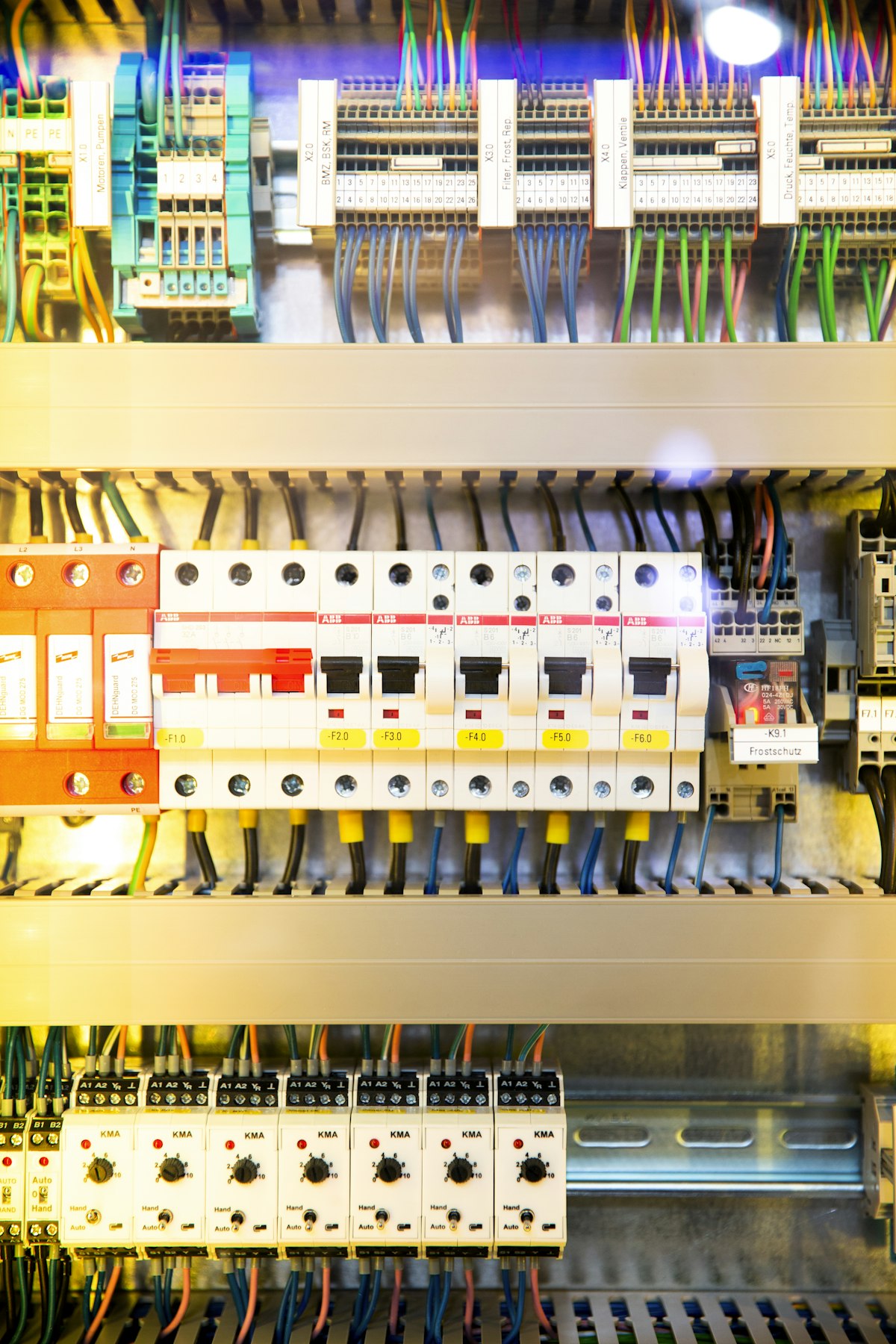
High-current systems at low voltage need heavy, expensive cable to stay within safe limits. Moving to a higher system voltage solves the problem at the design stage — before any cable gets run. Photo: Ricardo Gomez Angel / Unsplash
Run the numbers on a 3,000W inverter connected to a 12V battery bank:
3,000W ÷ 12V = 250A continuous — needs 2/0 AWG cable or heavier
3,000W ÷ 24V = 125A continuous — manageable with 2 AWG
3,000W ÷ 48V = 62.5A continuous — straightforward, 6 AWG works
At 250A, every connection point is a heat source. Undersized cable doesn’t just reduce efficiency — it becomes a fire risk. And the cost of thick enough cable at that current is significant. People build 12V systems with 3,000W inverters and then wonder why the wiring gets warm under load.
“The battery voltage isn’t just a spec — it defines the architecture of the entire system. Getting it wrong means rebuilding everything later.”
| Inverter Size | Right System Voltage | Why It Matters |
|---|---|---|
| Up to 1,000W | 12V | Simple, widely supported, current stays manageable |
| 1,000W – 3,000W | 24V | Half the current vs 12V, meaningfully lower cable cost |
| 3,000W+ | 48V | Industry standard for solar — lowest current, most efficient, easiest to expand |
Start from your inverter’s rated wattage and work backward. For anything above 1,500W — especially if there’s solar in the picture — 48V is almost always the right answer. Lower current through everything means less heat, less waste, and a longer-lasting system overall.
Frequently Asked Questions
For most homes it comes down to AGM or LiFePO4. AGM costs less upfront, requires no maintenance, and works reliably for years. LiFePO4 costs more to start but delivers 4–10× more cycle life and nearly double the usable capacity per rated Ah. If you’re running it regularly and want to keep the system for 5+ years, lithium typically wins on total cost. For emergency-only backup that rarely gets cycled, AGM is the practical choice.
Write out every device you need running during a blackout, its wattage, and how long you’d need it. Watts × hours = watt-hours per device. Add them up, divide by your system voltage, then divide by your usable DoD (0.5 for lead-acid, 0.85 for lithium). That’s your minimum bank size. I always add 20% on top — devices rarely match their rated draw exactly, and running the battery to its absolute limit on day one isn’t ideal.
No. When batteries of different ages or states of health are wired together, the weaker one limits the entire bank. The newer battery over-discharges trying to compensate. Both age faster than they would on their own. Replace the whole bank at once, ideally with batteries from the same manufacturer and production batch.
With correct sizing and a charger that matches the chemistry: 3–5 years for AGM, 5–8 for Gel, 10–15 for LiFePO4. The two things that kill batteries early are chronic undercharging (causes sulfation in lead-acid) and chronic overcharging (damages electrolyte). A quality charger set to the right profile matters as much as the battery itself.
More than most people expect. Lead-acid loses roughly 1% capacity for every °C below 25°C — so a 100Ah battery sitting at 5°C is closer to 80Ah in practice. Heat accelerates chemical degradation from the other direction: every 10°C above 25°C roughly halves the calendar life of a lead-acid battery. If the installation environment gets hot or cold, Gel and LiFePO4 handle temperature swings better than standard AGM or flooded types.
Best case: the inverter refuses to start. Worst case — especially if the battery voltage is higher than the inverter’s rated input — the inverter gets permanently damaged. Check the DC input voltage range in the inverter’s spec sheet before connecting anything. For 48V systems, also verify the batteries are wired in series correctly to actually hit that voltage — a wiring error here can look fine until it isn’t.